Why buy a custom motorcycle (and what to check)
Why people buy one-off custom motorcycles, and what to check before you hand over any money: the builder, the paperwork, the build, insurance, valuation and getting it home.
By Chris ·
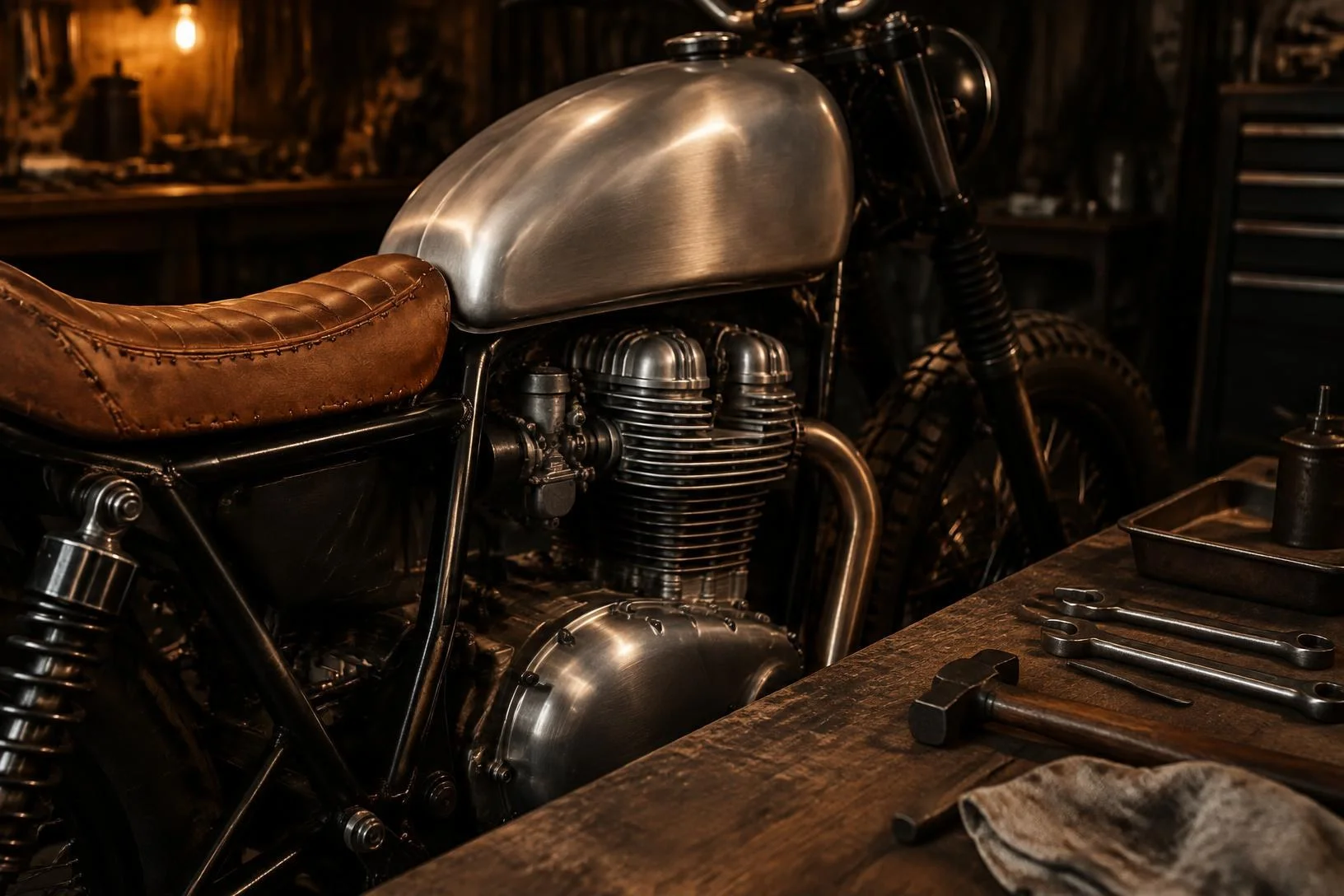
Most motorcycles are built by the thousand. A custom is built by a person, usually in a small workshop, often over months. That's the appeal, and it's also why buying one needs a bit more care than buying a bike off a dealer's floor.
This guide covers why people buy custom motorcycles, and what to check before you hand over any money.
Why buy a custom motorcycle?
It's one of one. Nobody else will pull up at the café on the same bike. Every choice, from the stance and the seat to the paint and the exhaust note, was made by someone for a reason.
You can see the work. Good custom builders show their workings: the welds, the wiring, the parts they chose and the parts they made. You're buying craft as much as transport.
It's often built around a proven base. Many customs start life as a well-known donor bike: a BMW boxer, a Triumph twin, a Honda CB. The engine and running gear are known quantities, with parts and specialists all over the country.
You're backing an independent. Most UK builders are one or two people. Buying a finished bike from them keeps the workshop going and the next build happening.
It's cheaper than commissioning. A commission can mean a long wait and a bill that grows as the build goes on. A finished bike is a known price, and you can see and ride exactly what you're getting.
What to check before you buy
1. The builder
Look at their past work and how long they've been building. Ask how long this bike took, what was done in-house and what was sent out (paint, upholstery, machining). A builder who's proud of the work will happily talk you through it. Ask what happens if something isn't right in the first few months.
2. The paperwork
V5C (logbook): check the frame (VIN) and engine numbers on the bike match the V5C, and that the seller is the registered keeper or can show they're selling on the owner's behalf.
History check: run a vehicle history check for outstanding finance, write-offs and theft markers. It costs little and can save you a lot.
Modifications and registration: DVLA uses a points system to decide whether a heavily modified vehicle keeps its original registration. A bike with major changes, especially to the frame, may need an inspection and can end up on a 'Q' plate. Ask the builder how the registration has been handled and whether the V5C reflects the bike as it is now.
MOT: most vehicles over 40 years old don't need an MOT, but not if they've been substantially changed. The Federation of British Historic Vehicle Clubs says a motorcycle built from components of different makes or models, or on a 'Q' plate, counts as substantially changed. So many customs built on old donors still need a current MOT. Check the MOT history online using the registration.
3. The build itself
Receipts and records: a build sheet, photos of the work in progress and receipts for major parts are a good sign, and they add value when you come to sell.
Brakes and suspension: these matter more than anything cosmetic. Ask what's been upgraded and what's original.
Wiring: tidy, protected, properly terminated wiring is a sign of care throughout. Hidden, taped-up wiring is a question to ask.
Welding and fabrication: look at brackets, subframes and mounts. Clean, consistent work should be the standard.
Fit for you: custom riding positions can be dramatic. Sit on it, and ride it if you can. A bike that looks perfect and hurts after twenty minutes won't get ridden.
4. Insurance
Tell your insurer about every modification. Leaving something out can void a policy when you need it most. For a one-off, ask about an agreed value policy, so a total loss pays out what the bike is actually worth rather than what a standard donor model is worth. Specialist insurers are usually better at this than comparison sites.
5. Valuation
An independent valuation from a recognised provider supports an agreed value policy and gives you confidence in the price. It's worth getting before you insure.
6. Paying for it
Some lenders are cautious about one-off bikes, so if you're using finance, check early that your lender will cover a custom. Whatever you do, don't pay cash to a stranger, and use a traceable payment method.
7. Getting it home
If the bike is at the other end of the country, use a specialist motorcycle transporter with goods-in-transit insurance rather than riding home on a bike you don't know yet.
A quick checklist
Frame and engine numbers match the V5C
History check clear
Registration status understood (original plate, age-related or Q)
MOT current, or exemption properly confirmed
Build records, photos and receipts
Brakes, suspension and wiring checked
Sat on it and, ideally, ridden it
Insurer told about every modification, agreed value considered
Independent valuation
Transport booked
Where Saddle Row fits
Saddle Row is a showroom for finished custom motorcycles from independent UK builders. We don't hold stock and we don't take your money: you buy direct from the builder. We can point you to the rest, including finance, insurance, independent valuation and delivery, so you can focus on finding the right bike.